43-Hilma Hooker
Dive site number 43 - Hilma Hooker is one of the most famous dive sites in the Caribbean. Read on to discover the story behind this legendary wreck..
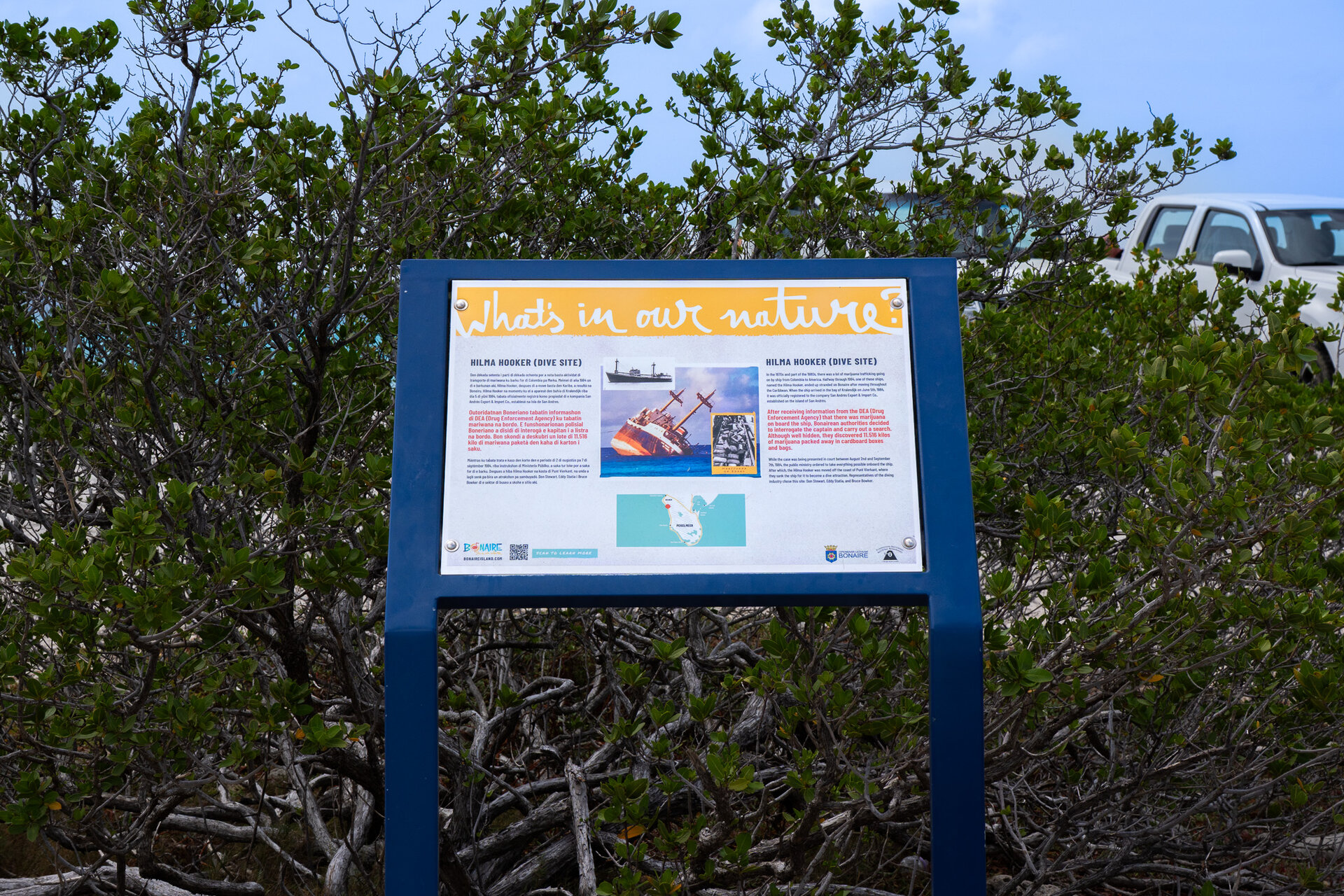
In the summer of 1984, the Hilma Hooker experienced engine problems at sea and was towed to the port of Kralendijk on Bonaire. The ship was already suspected of drug trafficking, and during inspection, the captain could not produce any valid papers. Behind a false wall, authorities discovered 11,000 kilos/24,000 pounds of cannabis. The crew was arrested, but the ship’s owners were never found.
After months of neglect, the Hilma Hooker began taking on water. To prevent her from sinking in the harbor and obstructing shipping, she was towed to an anchorage. On September 12, 1984, the ship suddenly rolled to starboard and sank within minutes.
The wreck now lies between two coral reefs just beyond the Belnem district. At approximately 250 feet long and 108 feet deep, the Hilma Hooker offers divers plenty of opportunities to explore. Today, it is one of Bonaire’s most famous dive sites and is recognized as one of the top diving spots in the Caribbean. What was once a symbol of smuggling and drama has transformed into an impressive underwater museum, alive with coral, fish, and adventure.
↓ At the bottom of this page you will find some personal tips for dive site 43- Hilma Hooker ↓
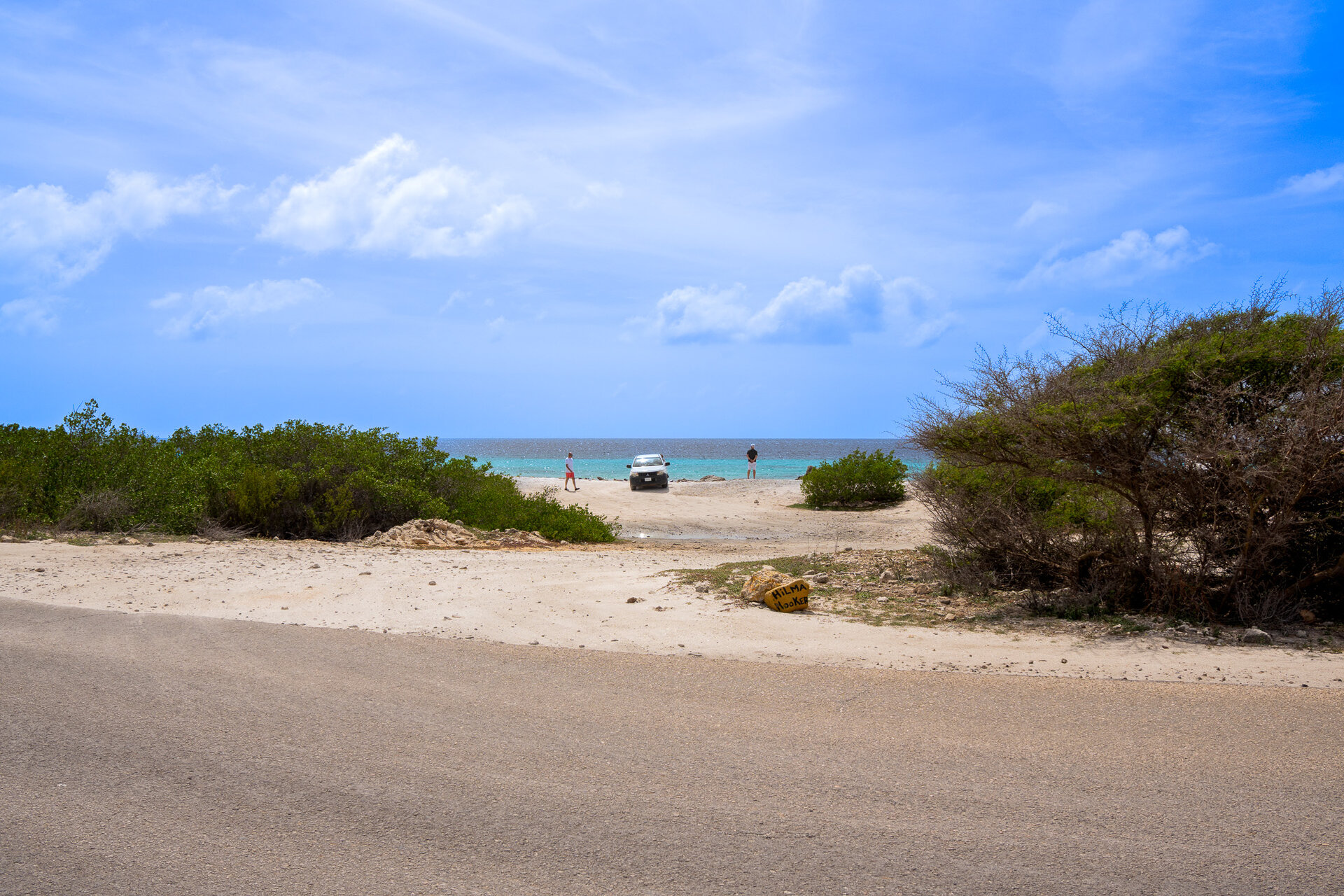
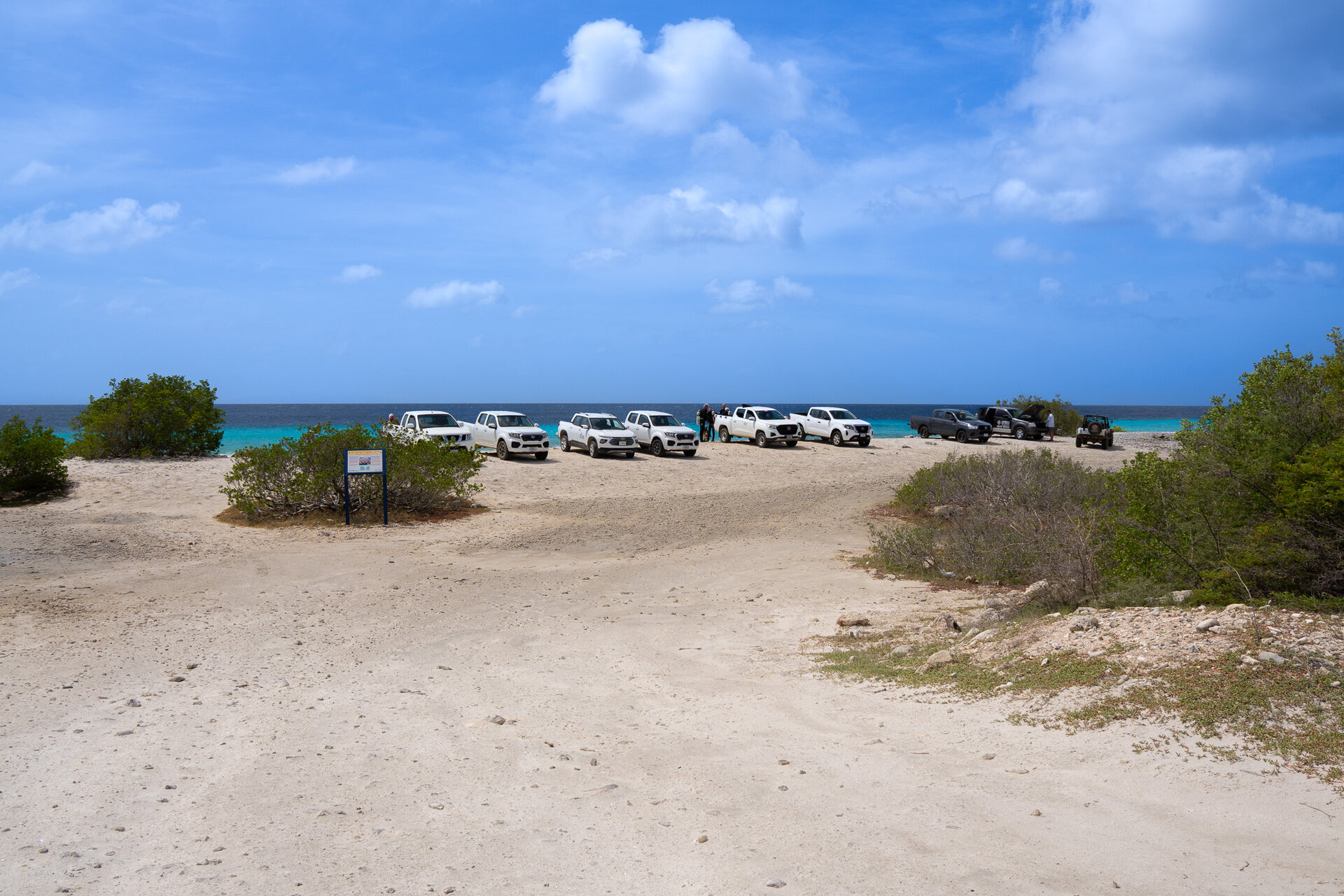
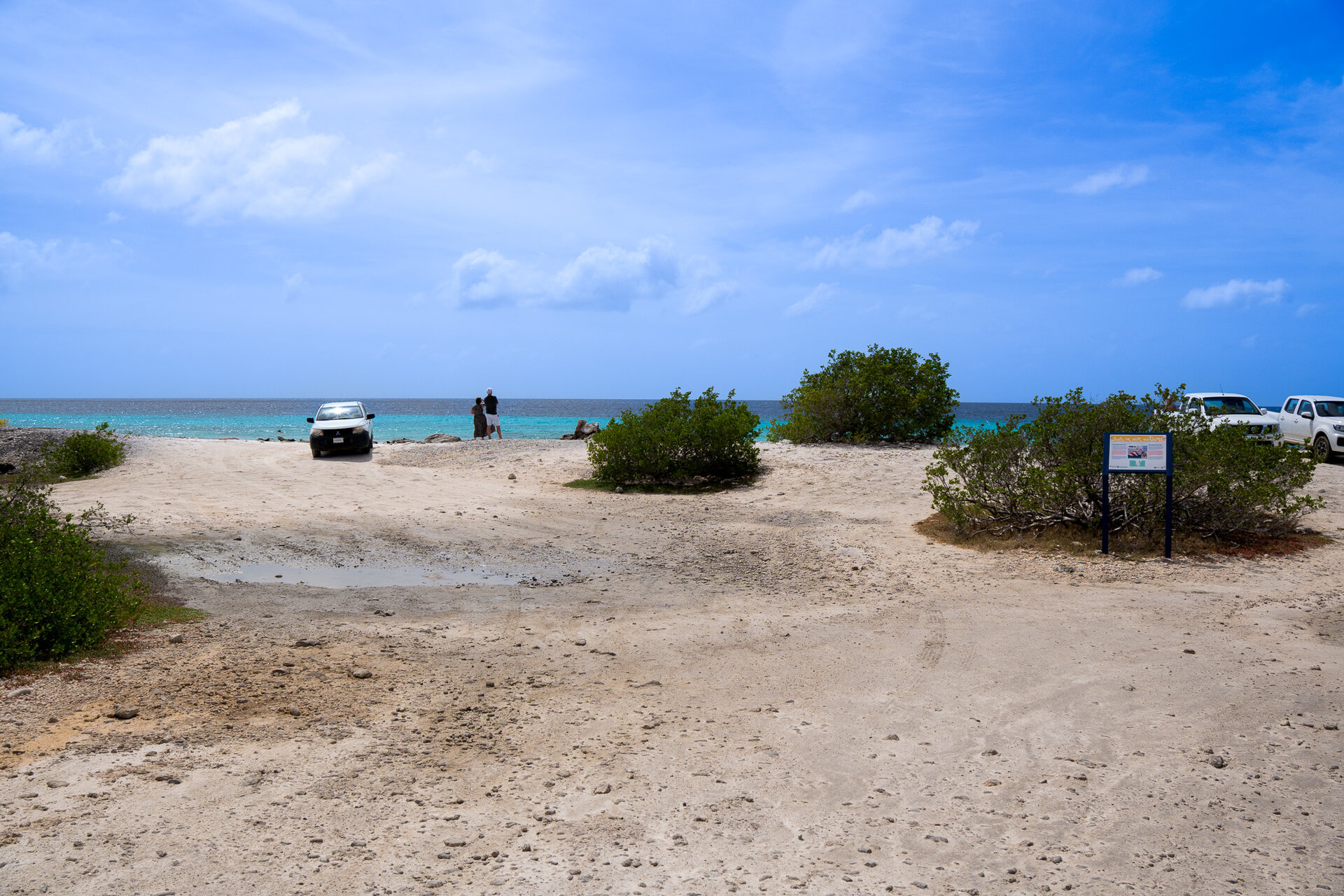
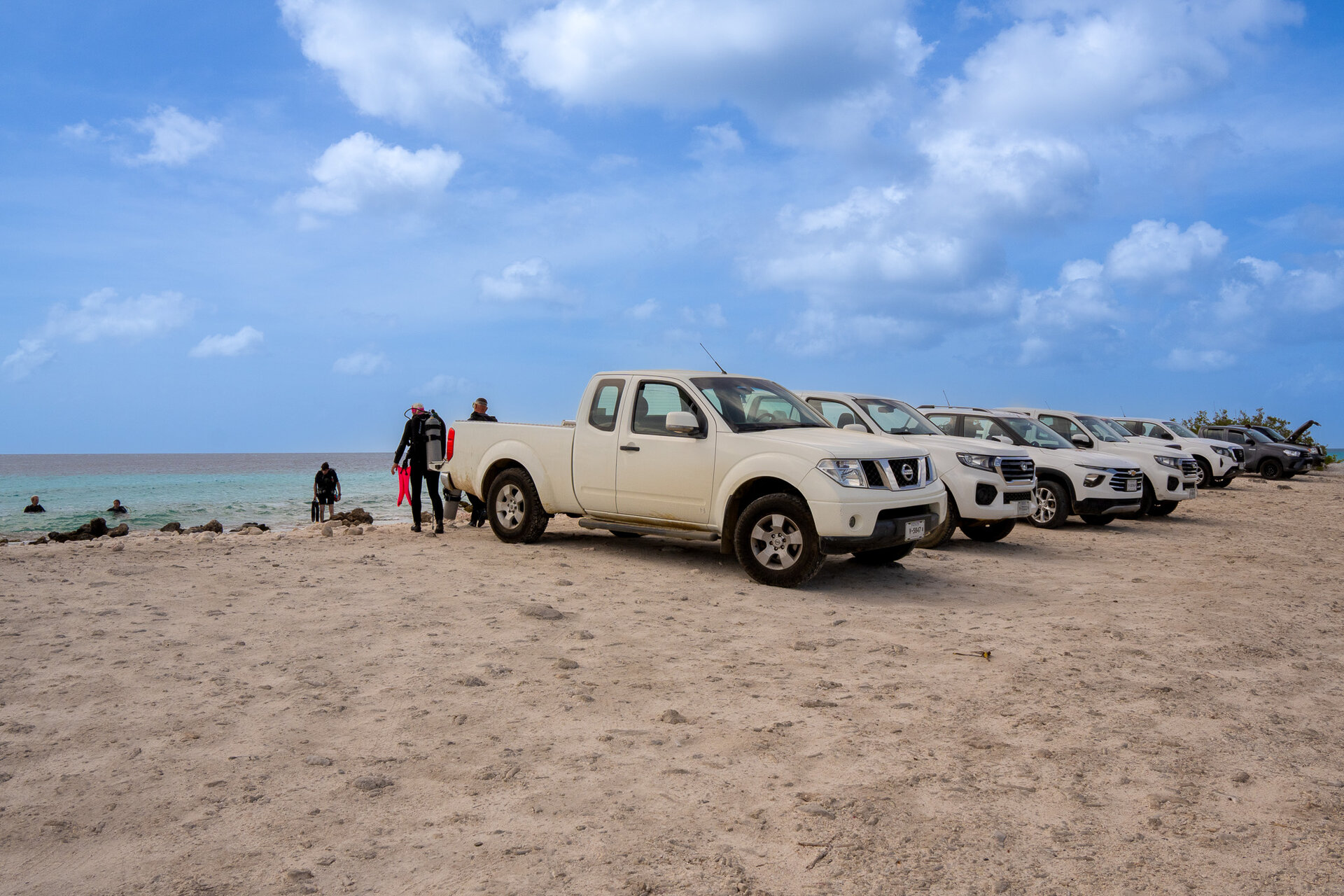
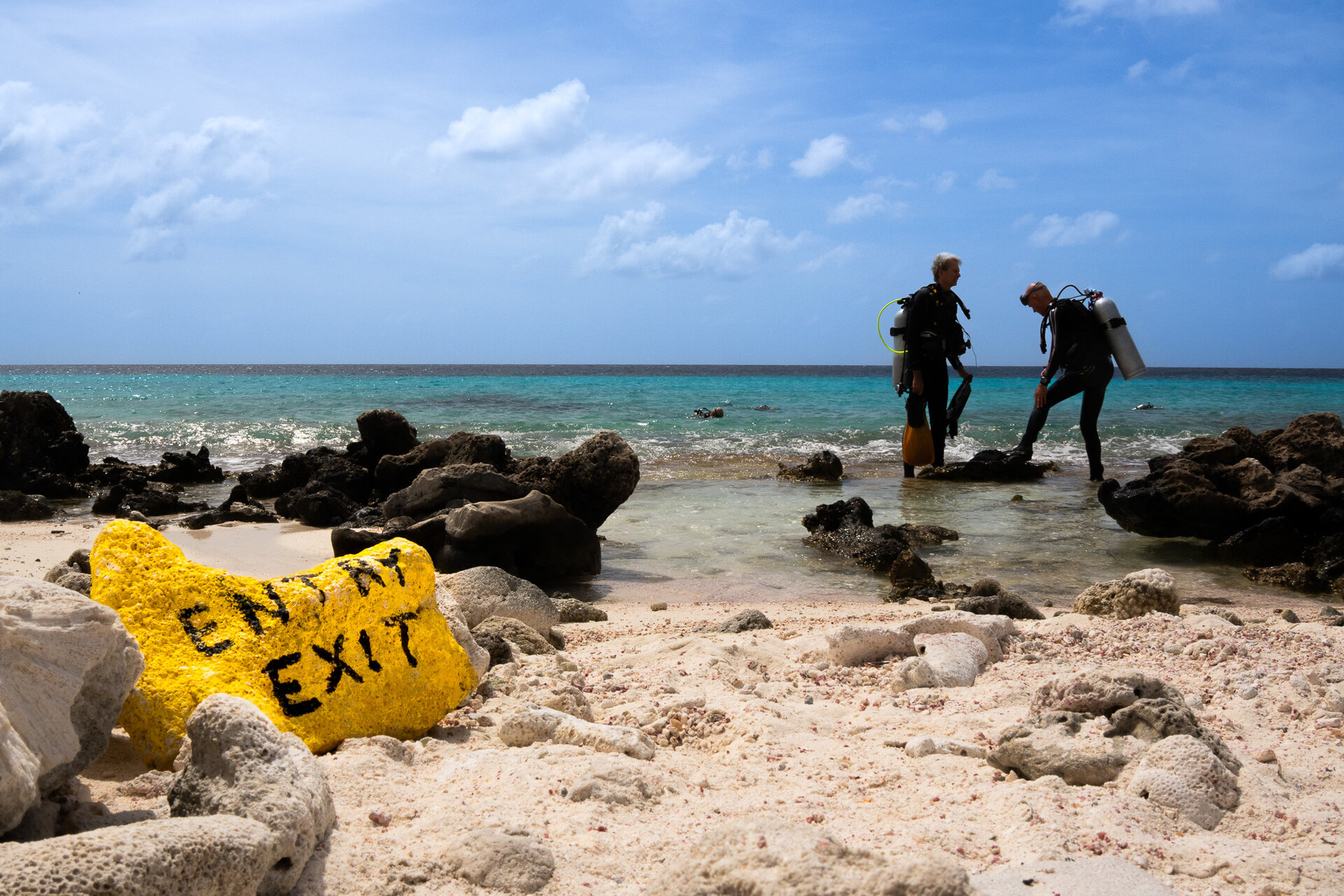
💡Personal advice💡
- Hilma Hooker has three buoys: the left buoy at the bow, the right buoy at the stern, and the middle buoy marking the dive site.
- From the shore, I align my compass with the left buoy and dive toward it. I then follow the wreck along the hull toward the stern at a depth of around 80 feet, keeping a close eye on my No Decompression Limit. At the stern, you will find the propeller. I complete the route by swimming along the hull back toward the left buoy and finally return to shore over the reef using the compass.
- Currents can occur at Hilma Hooker. Because of the wreck’s position relative to the reef, the current sometimes flows a bit faster between the hull and the reef. If you find it difficult to dive against the current, I recommend returning over the reef at a shallower depth, where you are less affected by the current.